What we said in October — and what happened
The business held; the level broke in a month; both tests turned amber; six details were wrong
On 2 October we published ServiceNow at $137.76 with a verdict for patient owners: a very good business at a fair price. We said customers renewed 98% of their contracts every year, that the subscription margin was slipping as AI work added computing costs, and that the company had spent $11.7bn on acquisitions in a hurry. We told readers to start small and to add below $115. We named two numbers that would tell us whether the AI fear was real: growth in contracted revenue for the next twelve months, and the subscription margin, which we wanted to see settle above 80%. Twenty-seven days later the shares closed at $109.67, and on 20 November at $87.66. Here is the account.
| What we said on 2 Oct | What happened by 20 Nov | Grade |
|---|---|---|
| 'Start small; add below ~$115' | Broken on 29 October (−26.9% in a day). The price is now 23.8% below the level. A buyer at $115 has lost about a quarter. | ✗ Early |
| Renewal rate 98%; 'what would make us leave: renewals slipping' | 98% in the third quarter and the first nine months (97% a year earlier). | ✓ Held |
| Watch contracted-revenue (cRPO) growth | Q3 +21% in constant currency, then a Q4 guide of 18.5%, the first quarter without last year's Moveworks purchase in the comparison. | ◆ Amber |
| Subscription margin 'should settle above 80%' | Q3 80.0% on the company's adjusted measure, from 83% a year earlier; the full-year guide is 81%. | ◆ On the line |
| Cash margin guide 35%; stock pay ~15% | Free-cash-flow guide raised to 36%; stock pay 15.4% in Q3, guided to 14% in Q4. | ✓ Better |
| AI contract value 'over $1bn', ~$1.5bn this year | Target raised to $1.7bn for the year. | ✓ Beaten |
| 'Another large acquisition paid for in a hurry' would make us leave | None announced since October that we could find; five small deals this year cost $612m in total. | ✓ Not triggered |
| ~$0.8bn of net debt after $11.7bn of deals | $0.56bn at 30 September; no buybacks in Q2 or Q3. | ✓ Right |
Our errors. None changed the verdict, but six details in the October report were wrong or loose. We wrote that Amit Zavery had been at ServiceNow since November 2024; the proxy says October 2024. We called Bill McDermott chairman and chief executive since November 2019; McDermott has been chief executive since then, but chairman only since October 2022. In Part I we described "three acquisitions for $11.7bn"; the $11.7bn was four deals (Moveworks, Veza, Armis and Logik), as Part VIII of the same report said. Our owner-earnings range of $2.30–3.10 a share mixed two definitions of free cash flow; on one consistent basis it was $2.65–3.10, or 44–52 times, not 44–60. We wrote that "two directors sold small amounts" after the chief executive's purchase in February; three directors sold, one of them, Anita Sands, about $1.48m, and a president, Paul Fipps, sold too. And when we re-run our own valuation from the assumptions we printed, the central case comes to about $139 rather than $142 and the company-plan case to about $190–196 rather than $205; the assumptions were not fully specified, which is our fault.
One more omission belongs to our postscript of 17 November, which said nothing about the largest governance event of the quarter: $138m of new share awards to six executives on 26 October (Part V). Every other figure we re-checked, including the share count, the net cash and debt, stock-based pay, the margins, the backlog, the buybacks, the chief executive's purchase and pay, and the Justice Department matter, was correct.
★ Up 61%, then down 45%
A summer rally, a record October, and the worst day since the company listed
| Date | What happened | NOW that day |
|---|---|---|
| 15 Oct | No company news found; Piper Sandler raised its target to $175 the next day (TIKR). | +6.1% |
| 23 Oct | The high since our X-Ray. | $158.96 |
| 26 Oct | The board grants $138m of 'Leadership Awards' to six executives (Part V). | −0.5% |
| 29 Oct | Q3 results the evening before: a beat, but a Q4 cRPO guide of 18.5% against about 19% expected (as reported). Worst day since the 2012 listing. | −26.9%, $109.67 |
| 5 Nov | A Nasdaq fall of 5.5% (as reported); no company news. | −5.9% |
| 17 Nov | Software sold as a group: 25 of 28 systems-software peers down, Salesforce −9.5% (Trefis). No company news. | −6.5% |
| 20 Nov | A broad AI sell-off (Nasdaq −5.3%, as reported); ServiceNow fell less than the market. | −1.4%, $87.66 |
One day did most of the damage. Of the 36% lost since our X-Ray, 27 points came on 29 October, and that day was about ServiceNow's own numbers. Other software shares fell 4–7% the same day, but the larger share of the move was company-specific. The rest came in November, when the market began to sell anything that might lose to AI agents, and ServiceNow was the first name on that list. On 20 November, the worst day for the Nasdaq in months, ServiceNow fell only 1.4%: by then much of the fear was already in the price.
That matters for how we read the fall. A share that falls with its sector tells you about the mood; a share that falls 27% on its own results tells you the market learned something. What it learned is in Part III: not that customers were leaving, but that the growth in what they have committed to pay is slowing, at exactly the moment the market was most afraid it would.
Where the price sits. At $87.66 the shares are at their lowest close since 23 April, 5.6% above the 2026 closing low of $83.00, 16% below the $104.60 the chief executive paid in February, 19% below the $107.97 average of the company's accelerated buyback this year, and 63% below the record of January 2025. The market value has fallen from about $142bn on 1 October to about $91bn.
★★ The two numbers we said to watch
Contracted growth slows to 18.5%; the margin sits exactly on our line
On 28 October ServiceNow reported third-quarter subscription revenue of $3,988m, up 21% (20.5% in constant currency), slightly above its own forecast. Contracted revenue for the next twelve months, the number the company calls current remaining performance obligations or cRPO, was $13.65bn, up 20.5%. Free cash flow was $822m and the company raised its full-year cash-margin guide to 36%. On most measures it was a good quarter. The shares fell 27% on one line of the guidance: cRPO growth of 18.5% in the fourth quarter.
Why 18.5% matters more than it looks. ServiceNow bought Moveworks in December 2025, so Moveworks was already in last year's fourth-quarter backlog. Every quarter of 2026 until now compared a backlog that included Moveworks with one that did not, which flattered growth by about a point. The fourth quarter is the first clean comparison, and it shows 18.5%. Armis, bought in April for about $7.6bn, still adds to growth, but its contracts can be cancelled for convenience, which keeps some of its value out of cRPO. Put together, outside estimates and our own arithmetic put growth without acquisitions at about 18%. That is still a fine rate for a $16bn business. It is also the rate the bears said AI would push down, and it is going down.
| Q3 2026 | Value | vs a year earlier |
|---|---|---|
| Subscription revenue | $3,988m | +21% (20.5% cc) |
| cRPO / total RPO | $13.65bn / $29.7bn | +20.5% / +22% |
| Subscription gross margin, adjusted / reported | 80.0% / 73.5% | 83% / 80% |
| Operating margin, adjusted / reported | 32.5% / 9.5% | 33.5% / 17% |
| Free cash flow (company definition) | $822m | $592m |
| Stock-based pay | $633m (15.4%) | $492m (14.4%) |
| Q4 guide: subscription / cRPO | +22.5–23% / +18.5% | Moveworks no longer in the comparison |
The margin. The subscription gross margin on the company's adjusted measure fell from 83% to 80.0%. The 10-Q gives the reasons: third-party cloud costs up $79m in a year, as more customers run on public clouds and as AI work uses more computing power, and the costs of the acquired businesses. On the reported measure, which includes the amortisation of what was paid for acquisitions, the margin fell from 80% to 73.5%. In October we said we wanted to see the adjusted margin settle above 80%. It has settled exactly on it, and the guidance for the full year (81%) implies roughly the same in the fourth quarter. A margin that stops falling at 80% is a cost of doing AI business. A margin that keeps falling is a sign that AI work is being sold for less than it costs. We do not yet know which this is.
The professional-services loss. A smaller number points the same way. ServiceNow's consulting and implementation arm lost money on every dollar of revenue in the quarter: a gross margin of −32.5% on the reported measure, against roughly break-even a year earlier. The company says it is spending through partners to help customers get value from AI faster, and expects the loss to widen for the year. Paying to help customers use the product is sensible; it is also what a company does when the product is harder to put to work than the sales pitch suggested.
Management's answer. According to press accounts of the call, the finance chief called cRPO "a very nuanced accounting metric", said that a pricing change on 1 July had pulled some renewals into the third quarter, and called the idea that AI would disrupt ServiceNow "false". All three may be true. But the first two are reasons why the third quarter looked better than the trend, not reasons why the fourth will look better than the guide.
The seat question, measured
What the numbers can show about AI agents, and what they cannot
In October we framed the central question as whether AI agents need ServiceNow or replace it. Seven weeks later we can say something more precise: the evidence that would answer it is not yet in the numbers ServiceNow reports, and one of those numbers cannot show it at all.
The 98% cannot see shrinkage. The renewal rate is the strongest fact in ServiceNow's favour, and we leaned on it in October. Read the definition in the 10-Q: a customer that reduces its subscription on renewal "is not considered a lost customer". A company that renews with half the seats counts the same as one that renews with all of them. The renewal rate therefore measures whether customers leave, which they do not, but not whether they pay for fewer people, which is exactly what the seat-compression thesis predicts. The number that would show it is growth in contracted revenue from existing customers, and that is the number that slowed.
What would show seat compression, if it were happening. First, cRPO growth falling faster than subscription revenue growth, because renewals at lower volumes reach the backlog before they reach revenue: in the fourth quarter that gap opens to about four points (subscription revenue guided at 22.5–23%, cRPO at 18.5%), partly because of Armis. Second, more of the growth coming from new products and acquisitions and less from the core: the company does not disclose this, but the share of growth bought through acquisitions rose this year. Third, a change in how the company prices. Here the evidence is clearest: ServiceNow now calls itself a "hybrid" business, selling by the seat and by the unit of work, and its 10-K warns that adding consumption-based pricing may not recover its investment.
| Signal | What the filings show | Read |
|---|---|---|
| Customers leaving | Renewal rate 98%; 680 customers paying over $5m a year, +23% | ✓ No |
| Customers paying for less | Not disclosed; the renewal rate counts a smaller renewal as retained | ◆ Unknown |
| Backlog slowing faster than revenue | Q4 guide: cRPO 18.5% vs subscription 22.5–23% | ◆ Yes, partly Armis |
| AI products selling | AI contract-value target raised from $1.5bn to $1.7bn for 2026 | ✓ Yes |
| Pricing moving to consumption | 'Hybrid' model; a 1 July pricing change; risk factor on recovering the investment | ◆ Under way |
| The company's own use of AI | $167m of severance in nine months, 'through AI-driven efficiencies' | ◆ The thesis, in-house |
The company proves the point on itself. ServiceNow spent $167m on severance in the first nine months of 2026, and its 10-Q says it is reducing staff "through AI-driven efficiencies". It is entirely rational for ServiceNow to do this. It is also exactly what its customers' IT departments will do, and each of them pays ServiceNow by the person. A company that sells to the people whom AI makes fewer has to sell something else to the people who remain: the agents, the workflows and the data. ServiceNow says it can, and its AI sales are growing. The question for an owner is whether the new revenue grows faster than the old revenue shrinks, and that is a question no one can answer from a single quarter.
Where that leaves us. We do not think the fall proves the bears right. Revenue grew 21%, the cash margin rose and no customer of size has been reported leaving. But in October we said the AI question could not be answered and that the price was fair for a company that had to answer it. The price is now far lower, and some of the evidence has moved, modestly, towards the bears. Both facts belong in the verdict.
★ $138 million, two days before the results
Retention awards granted at the top, disclosed in a footnote
On 26 October, two days before it reported the quarter that took a quarter off its share price, ServiceNow's board granted what it called Leadership Awards to six executives: restricted shares with a target value of about $137.9m, vesting 25% at the end of 2027, 35% at the end of 2028 and 40% at the end of 2029. The chief executive, Bill McDermott, received $50m, about the size of McDermott's entire 2025 pay of $51.6m, and on top of it. The awards were not announced in a separate filing. They appear in the Forms 4 filed on 28 October, the day of the results, and in Item 5 of the quarterly report, which explains them as a way "to retain and incentivize our current senior leadership team during an exceptionally competitive period for enterprise technology talent".
| Executive | Role | Target value | Shares |
|---|---|---|---|
| Bill McDermott | Chairman and Chief Executive | $50.0m | 349,900 |
| Amit Zavery | President, Chief Product and Operating Officer | $25.0m | 174,950 |
| Paul Fipps | President, Global Customer Operations | $22.5m | 157,455 |
| Gina Mastantuono | President and Chief Financial Officer | $17.75m | 124,215 |
| Jacqueline Canney | Chief People and AI Enablement Officer | $11.3m | 79,078 |
| Hossein Nowbar | President and Chief Legal Officer | not in the 10-Q list | 79,078 |
Three things an owner should notice. First, the price. Dividing each target value by the number of shares gives about $142.90 a share, against a closing price of $158.18 on the day of the grant. We do not know how the board set the number of shares; a price set from an earlier average is common. But three days later the shares were $109.67, and they are $87.66 today, so the awards are worth about $85m now. If the shares recover, the executives gain from the full recovery; if they do not, the executives keep about $85m of shares that cost them nothing.
Second, the timing. The board knew the results when it made the grant; the market did not. We have no reason to think the board acted improperly, and retention grants are often decided weeks in advance. But a board that grants $138m of shares two days before results it knows will disappoint, and discloses it in a footnote rather than a filing of its own, is not treating its owners' perception as a constraint. In a year in which the company stopped buying back shares, it found $138m of new ones for its leaders.
Third, what the awards are for. They pay for staying, not for performance: there is no price target, no growth target and no margin target attached, only time. The chief executive's 2021 performance award, which did carry conditions, reached the end of its performance period on 30 September with four of its eight tranches vested, according to the 10-Q. Whatever the board's reasons, the new awards carry no conditions beyond staying. Shareholders approved the pay policy at the May meeting with about 85% of the votes cast.
The moat, rechecked
Still wide at the core; the meter that measures it is less precise than we thought
| The claim (October) | Evidence now | Verdict |
|---|---|---|
| Switching costs: the system of record for IT, HR and security work | Renewal rate 98%; 680 customers above $5m a year, +23%; 19 deals above $5m of new annual value in Q3, +135%. | ✓ Intact |
| The platform is where AI agents will act | AI contract-value target raised to $1.7bn; agent use 'in production' up more than 13 times this year (company). | ✓ Selling |
| Pricing power | A pricing change on 1 July; a move to 'hybrid' pricing; subscription margin 83% → 80%. | ◆ Being tested |
| No incumbent taking share | Still true; but ServiceNow launched Flow, a cheaper AI service desk that runs outside its own platform. | ◆ Defending from below |
We keep the moat at 8. Nothing in the quarter suggests customers are leaving or that a competitor is taking the core of ServiceNow's business. The two changes are subtler. We now know the renewal rate cannot detect customers paying for less, so the main evidence for the moat is weaker evidence than we presented it to be. And ServiceNow launched Flow, which its release describes as "a new AI-native service desk that operates outside the ServiceNow AI Platform". A company that builds a cheaper product outside its own platform is protecting its customers from competitors at the low end, which is wise. It is also accepting that some customers will pay less, which is the seat question again, decided by the company itself.
- That revenue grows by about 7% a year or more for ten years, from about $16.2bn this year; the company plans close to 17% a year to 2030.
- That AI agents sold by ServiceNow replace at least as much revenue as AI removes from seat-based subscriptions.
- That stock-based pay falls towards the 10% of revenue the company has promised by 2029, so that more of the cash flow reaches owners.
The competition
No incumbent is winning; the threat is cheaper agents from below
| Rival | Where it meets ServiceNow | The latest | Read |
|---|---|---|---|
| Salesforce | Customer service; Agentforce IT Service. | Fell 9.5% on 17 November with the rest of software; its own growth is slower. | ◆ Same fear |
| Microsoft | Copilot agents inside the tools employees already use. | Bundled with the Office suite; the most likely 'good enough' alternative. | ◆ The large one |
| AI-native start-ups (e.g. Sierra) | Agents that resolve customer and IT requests directly. | Sierra reported adding about $150m of annual revenue in a quarter (TIKR). | ◆ Growing fast |
| Atlassian, Workday | IT and HR workflows for mid-sized companies. | Fell 4–7% on 29 October with ServiceNow. | ◆ Same trade |
Across our board. The software sell-off of November treated every seat-based company as one trade. That is a mistake in both directions. ServiceNow is better placed than most because its product is the record of how work flows through a company, not a tool a person uses; an AI agent that resolves an IT request still has to log it, route it and close it somewhere, and that somewhere is usually ServiceNow. But it is worse placed than the market's average software company in one respect: its price per customer is high, its customers are large, and the largest customers are the ones with the most to gain from paying for fewer seats.
The competitor that matters most is the customer. In ServiceNow's world the real alternative to paying more is not a rival product but a customer that builds its own agents on a model from a laboratory, connects them to ServiceNow's records, and pays for fewer seats. That is not a competitor that shows up in market-share tables. It shows up, if at all, in the slower growth of what existing customers commit to pay, which is the number in Part III.
Management, insiders & capital allocation
A great salesman, a quiet buyback, and awards in place of purchases
Capital allocation. We lower the score from 6 to 5. In nine months of 2026 ServiceNow spent $9.2bn of cash on acquisitions, most of it on Armis, and $2.2bn on buybacks, all of them in the first quarter: an accelerated buyback of 18.5m shares at an average of $107.97 and 1.6m more on the market. Since March it has bought back nothing, while its commercial paper reached $2.1bn; the cash went to reducing the debt taken on for Armis. The share count at 30 September, 1,037.9m, was the same as a year earlier: roughly $3.3bn spent on buybacks and on tax for vesting shares in twelve months bought no reduction at all, because the Moveworks purchase was paid partly in 9.6m new shares and because stock-based pay keeps issuing more.
The test now is simple. The company has about $4.2bn of buyback authorisation left and a share price 19% below what it paid in the first quarter. A management that believes its own guidance should be buying. A management that grants $138m of new shares to itself instead has told owners which use of capital it prefers. We will know in January whether the buyback resumed in the fourth quarter.
Insiders. Since 2 October no insider has bought a share on the market. The only open-market sales were by the chief people officer, about $0.43m under a plan adopted in May. Everything else in the Forms 4 is shares vesting and shares withheld to pay tax. The chief executive's purchase in February, at $104.60, is now 16% under water, a reminder that insiders' purchases are a sign of conviction, not of timing.
The numbers
A 33% cash margin, almost half of it paid out in shares, and six faults in our feed
The cash is real; so is the stock pay. Over twelve months ServiceNow generated about $5.15bn of free cash flow on the company's definition, 33% of revenue of $15.4bn. It also paid about $2.34bn in shares to its employees, 15% of revenue. Stock-based pay is a real cost: if the company paid in cash, the cash flow would be that much lower. Subtracting it leaves owner earnings of about $2.83bn, or $2.71 a share. On the company's guidance for 2026 (a 36% cash margin and stock pay of 15%) owner earnings would be about $3.28 a share. The company's definition also adds back the costs of acquisitions; on a stricter definition, operating cash flow less capital spending, owner earnings are about $2.33 a share.
Earnings quality. Two adjustments matter. Reported earnings for the first nine months include $367m of unrealised gains on the company's strategic investments, about $0.28 a share after tax, which will not recur; and the company has changed its adjusted earnings to exclude those gains in all periods, so the adjusted series is consistent but the reported one is flattered. And amortisation of what was paid for acquisitions, $198m in the third quarter against $33m a year earlier, is now the largest gap between reported and adjusted profit after stock pay. It is a non-cash charge, but it is the visible cost of having bought growth.
The balance sheet. At 30 September ServiceNow had $6.96bn of cash and marketable securities against $7.52bn of debt: about $0.56bn of net debt, from $8.6bn of net cash at the end of 2025. Goodwill is $10.0bn, 31.5% of total assets. Interest costs about $80m a quarter. None of this is dangerous for a company with $5bn of annual free cash flow. All of it is new, and a company that ran a net-cash balance sheet for a decade now runs a borrowed one.
| What the screen shows | What is wrong, and the number to use |
|---|---|
| Net debt $6.02bn; net debt to EBITDA 1.75× | Counts only cash, not $4.57bn of marketable securities, and adds leases. Net debt is <b>$0.56bn</b> without leases, $1.45bn with them. |
| Other non-operating income, Q3: −$66m | The release shows <b>−$3m</b>. The same kind of fault appears in our feed for Salesforce, Broadcom, Meta and Palantir. |
| Property and equipment, Q3: $2,924m | Includes $779m of leased office space. Property and equipment is <b>$2,145m</b>. |
| Revenue by product, FY2024: $14.24bn | Old and new rows counted twice, as we noted in October; still unfixed. Revenue was <b>$10.98bn</b> in 2024 and $13.28bn in 2025. |
| Insider trades: 27 rows, 13–18 November | Misses the 26 October awards (964,676 shares, 349,900 to the chief executive) and the February purchase. Use the Forms 4. |
| Diluted shares, Q2 2026: 1,037m | That is the six-month figure; the quarter was <b>1,034m</b>. Q3 was 1,043m. |
No dividend — and where the cash went
$11bn of acquisitions, $2bn of buybacks, and a share count that did not move
ServiceNow has never paid a dividend and has said nothing to suggest it will. For a company growing at 20% that is reasonable, provided the cash it keeps earns more inside the business than owners could earn outside it. In 2026 that test is harder to pass than usual, because most of the cash did not go into the business it already has. It went into buying other businesses, at prices that show up as $10bn of goodwill, and into buybacks that did no more than offset the shares issued to staff and to the owners of Moveworks.
Follow a dollar of the twelve months to September. ServiceNow generated about $5.15bn of free cash flow. It spent about $9.2bn on acquisitions in nine months, borrowing the difference. It spent about $2.8bn on buybacks over twelve months and about $0.46bn on taxes for shares vesting to employees, which is a buyback by another name. And at the end of it the share count was where it started. An owner received no dividend, no reduction in the share count, and a larger, more indebted company whose growth is now partly bought. That is not a disaster; Armis may prove a good purchase. It is a reason to treat the company's claims about returning capital with patience.
| Use of cash | Amount | Read |
|---|---|---|
| Free cash flow, 12 months | ~$5.15bn | ✓ 33% of revenue |
| Acquisitions, 9 months of 2026 | ~$9.2bn of cash (+$1.5bn of shares for Moveworks in 2025) | ◆ Growth bought |
| Buybacks, 12 months | ~$2.8bn; none since March | ◆ Stopped |
| Stock-based pay, 12 months | ~$2.34bn (15%) | ◆ Promised <10% by 2029 |
| Shares outstanding | 1,037.8m → 1,037.9m (Sep 25 → Sep 26) | Flat |
| Dividends | None | — |
★ Valuation
The price assumes growth falls to a third; our level allows for being wrong
Our method. We value ServiceNow on owner earnings, free cash flow less stock-based pay, because that is what an owner actually receives. We start from the 2026 revenue of about $16.2bn, grow it for ten years along three paths, apply an owner-earnings margin, put a multiple on the tenth year, subtract the net debt and discount everything at 10% a year. The three paths are the three stories about AI. In the first, seats shrink: growth falls from 13% next year to 4% by 2036, and margins never improve. In the second, growth slows the way the backlog says it is slowing, from 17% to 8%, while stock pay falls as promised. In the third, the company roughly delivers its 2030 plan.
| Path | Growth, 2027 → 2036 | Owner margin | Exit multiple | Value today |
|---|---|---|---|---|
| Seats shrink | 13% → 4% | 20%, flat | 12× | ~$63 |
| Backlog-like slowdown ◆ | 17% → 8% | 21% → 27% | 18× | ~$139 |
| Company plan | 20% → 10% | 22% → 32% | 22× | ~$228 |
| What $87.66 implies | ~6.9% a year, constant | 21% → 27% | 18× | $87.66 |
What is priced in? At $87.66, with margins improving as in our central case, the shares assume revenue growth of about 6.9% a year for ten years. Analysts expect 18.5% next year; the backlog says about 18% now; the company's plan needs about 17% a year to 2030. The price therefore assumes that growth falls to about a third of today's rate, and stays there, which is close to our seats-shrink story. In October, at $137.76, the same arithmetic implied about 12.6%. The fall has taken the price from "the plan, roughly" to "the bear case, roughly".
Why not buy it all now? Because the central case is not robust. If growth starts at 15% instead of 17%, it falls to about $128; if margins never improve, to about $112; if the market pays 15 times instead of 18 at the end, to about $124. Each of these is plausible if seat compression is real, and the evidence of the last quarter moved, modestly, in that direction. The price of $87.66 is below all of them, which is why we buy. It is not far enough below the bear case of ~$63 for us to buy everything at once.
Our level. For a business of this quality with a question this open, we want a discount of about 40% to our central value. That gives about $80: just under the 2026 closing low of $83, about 24 times this year's guided owner earnings, and a price that implies about 5.7% growth for a decade. Our October level of $115 was set against a fair price, for a business we thought was fairly priced. The business is the same; the evidence is slightly worse; the price is much better. So: buy in stages, and complete the position below $80.
Risks, lawsuits & controversies
Verified 22 November 2026 against the Q3 2026 10-Q, Forms 4 and attributed reports
Federal. One partner that resells to the US government accounted for 12% of revenue in the first nine months and 20% of receivables at 30 September, according to the 10-Q; federal contracts cluster in the third quarter. The Justice Department's investigation connected to the hiring of a former Army chief information officer, which led to the resignation of ServiceNow's president in 2024, is still open; the 10-Q says the company "cannot predict the timing, outcome or possible impact".
Legal. We found no securities class action filed against ServiceNow after the 29 October fall. Several law firms announced "investigations" on 29–30 October; these are solicitations for clients, not lawsuits, and we record them only because they sometimes precede one.
| Test | Today | What would change our mind |
|---|---|---|
| Q4 results and 2027 guidance, late January | cRPO guide 18.5% | cRPO below 17%, or a 2027 subscription guide below 17%, would say seat compression is in the numbers; we would stop at the first stage. |
| Subscription gross margin | 80.0% | Holding at 80–81% makes AI a cost of doing business; a fall towards 78% would say AI work is sold below cost. |
| Buybacks in Q4 | None since March | Buying below the $108 paid in Q1 would show management believes its guidance. |
| Stock-based pay | 15.4% of revenue | 14% in Q4 as guided, and a falling path in 2027, keeps the <10% promise for 2029 alive. |
| Large acquisitions | None since October | Another multi-billion purchase while the shares are down would end the stages. |
| The price | $87.66 | Below $80 with the tests intact: complete the position. |
In October I wrote that ServiceNow was a very good business at a fair price, and that I would add below a hundred and fifteen dollars. Twenty-seven days later the shares were below it, and today they are at eighty-eight. A reader who followed me to the letter is down about a quarter on the second half of the position. I set the level too high, because I set it for a business I thought was fairly priced and then the market changed its mind about the business.
Did the business change? Less than the price. Customers still renew ninety-eight per cent of their contracts, revenue grew twenty-one per cent, and the company raised its forecast for cash flow. But I asked you to watch two numbers, and both moved the wrong way. Growth in what customers have committed to pay over the next year is guided to eighteen and a half per cent, the first clean comparison after last year's acquisition. And the subscription margin has slipped to exactly the eighty per cent I said I wanted it to stay above. Neither is a disaster. Both are what the beginning of the bears' story would look like.
I also learned something about the strongest number in the case. The renewal rate counts a customer who renews with half the seats as a customer kept. It tells you customers do not leave, which is true, and nothing about whether they pay for fewer people, which is the question.
And I learned something about the board. Two days before the results, it granted six executives a hundred and thirty-eight million dollars of shares that vest with time alone, and told owners in a footnote. In the same year the company stopped buying back its own shares. I do not think anyone broke a rule. I think the board showed whose interests it weighs first, and I have lowered my view of management accordingly.
So why buy at all? Because at eighty-eight dollars the price assumes growth will fall to about seven per cent a year and stay there for a decade. If the bears are right, that is roughly fair. If they are half right, it is cheap. I would buy in stages now, and complete the position below eighty dollars, where the discount to what I think the business is worth is wide enough to cover my being wrong about AI. The January guidance will tell us more than any argument can.
— The Buffett Lens. When the price falls faster than the business, buy slowly; when the evidence falls with it, buy more slowly still.
Complete Below $80A very good business whose price now assumes its growth falls to about a third of today's. ★ At $87.66 the price is below our central value of ~$139, within a range of ~$63 (seats shrink) to ~$228 (company plan). Buy in stages; complete the position below $80, about 40% below our central value. Q4 results and 2027 guidance in late January.
Articles that take this apart
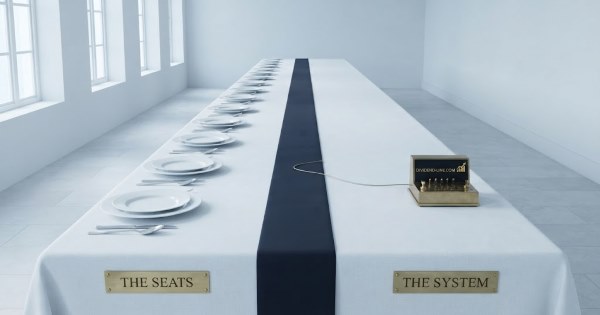 MarketDoes AI kill per-seat software?If software is priced per person and the work stops needing people, the arithmetic looks grim. The place to check is not the theory — it is the renewal rate.
 ValuationStock-based pay is a real costIt is excluded from the figure the company leads with, excluded from most screens, and paid entirely by you. The cheapest fix in investing is to add it back.