Parks and cruises earn 54% of this company's segment profit and grew 20% last quarter. Streaming has gone from losing $4 billion a year to making about $700 million a quarter. The shares trade at roughly 14 times next year's earnings.
Almost every article written about Disney is about television — the channels, the cord-cutting, the decline. That business is genuinely fading, and it is no longer where the money is.
The mismatch between what the company earns and what the company is discussed for is the opportunity, and it is also why it has persisted.
Where it comes from now
| At our 28 Sep 2026 report | Direction | |
|---|---|---|
| Parks and cruises | 54% of segment profit | +20% last quarter |
| Streaming | ~$700m a quarter | From a $4bn annual loss in 2022 |
| Traditional television | Shrinking | Structural, will not reverse |
| Adjusted earnings per share | Guided +16% this year | Double digits next |
| Valuation | ~14× next year's earnings | Cheaper than most of the past two decades |
Work through what the first row does on its own. If parks are 54% of segment profit and growing 20%, that single division adds roughly 10.8 points of group profit growth before anything else happens. Everything else in the company could stand still and the profit would still rise by about a tenth.
And the second row is the largest change in the company's recent history. A $4 billion annual loss becoming roughly $2.8 billion of annualised profit is a swing of nearly $7 billion a year, achieved in about five years — mostly while the press was still describing streaming as a money pit.
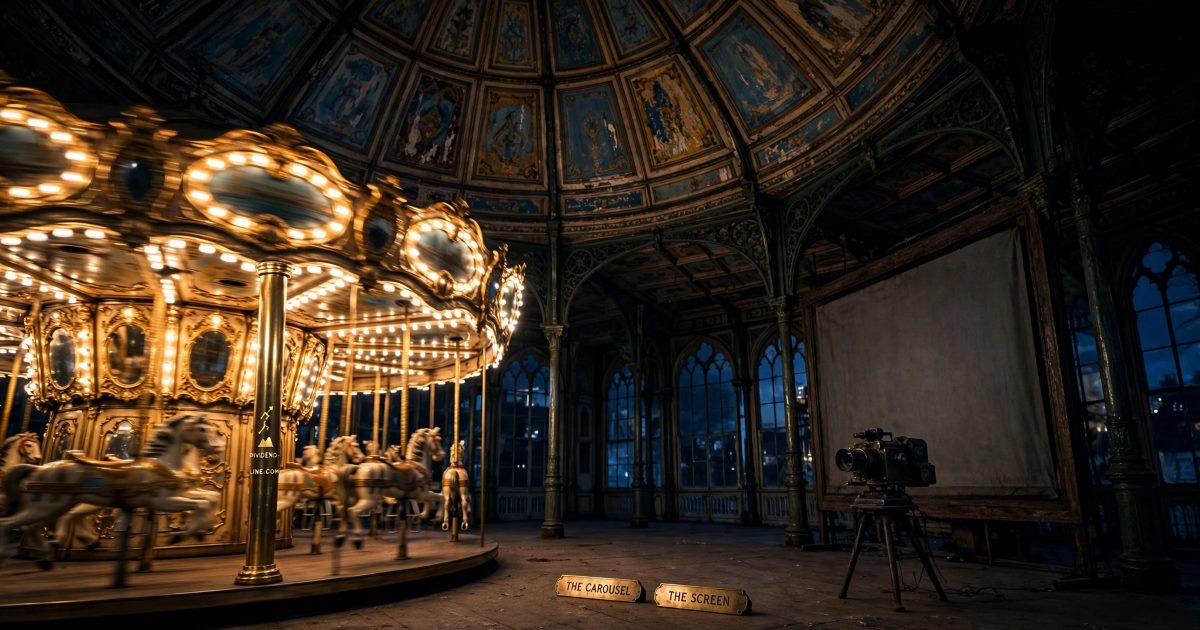
The carousel pays for the screen. It has been paying for it for years, and the share price is still quoted against the screen.
What 14 times actually buys
Fourteen times next year's earnings is an earnings yield of about 7.1%. The ten-year Treasury pays 5.12%. So you are being offered a 2.0 point premium over the risk-free alternative, from a business whose adjusted earnings are guided up about 16% this year.
Compare that with what the same hurdle does to most of our library: of the twenty-six companies we published in September, most had earnings yields below the Treasury. This one clears it with room, and it is growing.
That is the case, stated plainly. It is not a deep-value case — it is a good business at a price that has stopped assuming the good part.
Two real ones, and neither is the one you read about
- The cable channels are fading. This is structural and will not reverse. It is also already happening, already in the numbers, and already the thing everyone prices — which is precisely why it is the weakest argument against the shares.
- Sport is getting dearer. ESPN's costs rise with rights renewals whether or not viewers stay, and sport is the one category with genuine bidding competition from companies that do not need it to be profitable. This is the risk we would watch.
- A $60 billion parks build-out. Enormous capital committed to the part that is working — the right instinct, and a great deal of money to get wrong. Parks spending is long-dated and hard to reverse once started.
A new chief executive took over in March — the man who ran the parks business.
That is not a personality point. Capital allocation follows whoever is in the chair, and the person in the chair spent his career in the division that earns 54% of the profit and grows 20%. The $60 billion build-out and that appointment are the same decision, expressed twice.
Whether you like the company now depends substantially on whether you think that is the right place to put the money. We think it probably is — which is why our verdict was a great franchise at a fair-to-cheap price.
What would change our mind
This is the whole case. Parks are more than half the profit and the reason the arithmetic works. Attendance and per-visitor spending are both disclosed — a slowdown there is the signal, and it would arrive before anything shows up in the share price.
The swing from a $4bn loss is done; the question now is whether it compounds or plateaus. A flat line for a year would mean the business is a modest contributor rather than a growth engine, and the multiple should be lower.
The one place a single decision can move the numbers hard. Watch what gets paid, not what gets said about engagement.
Current price, our score, and the full report behind it.
The segment profit split, the parks build-out and ESPN's costs, worked through.
Frequently asked
Is Disney stock cheap right now?
At our September 2026 report it traded at about 14 times next year's earnings — cheaper than for most of the past two decades — which is an earnings yield of roughly 7.1% against a ten-year Treasury paying 5.12%. That is a modest premium for a business with adjusted earnings guided up about 16% this year and double digits next. Cheap for what it is, rather than cheap in the abstract.
Where does Disney actually make its money?
Parks and cruises, which earned 54% of segment profit and grew 20% in the quarter we examined. That is the opposite of how the company is usually discussed. Streaming has swung from a $4 billion annual loss in 2022 to roughly $700 million a quarter of profit, and the traditional television business — the part most coverage focuses on — is the part in decline.
Is Disney's streaming business profitable?
Yes, and the swing is the largest single change in the company's recent history: from losing about $4 billion a year in 2022 to earning roughly $700 million a quarter. Annualised, that is a turnaround of nearly $7 billion a year in profit, achieved in about five years — and it happened while most commentary was still describing streaming as a money pit.
What are the real risks at Disney?
Two, and neither is the story that gets written. The traditional cable channels are fading, which is structural and will not reverse. And sport rights are getting more expensive, which squeezes ESPN whether or not viewers stay. Against those sits a $60 billion parks build-out — enormous capital committed to the part that is working, which is the right instinct and also a great deal of money to get wrong.