SpaceX
The business, in plain English
Three companies under one name — and only one of them makes money
Most people think SpaceX is a rocket company. The numbers say otherwise. It is three businesses sharing a name and a founder:
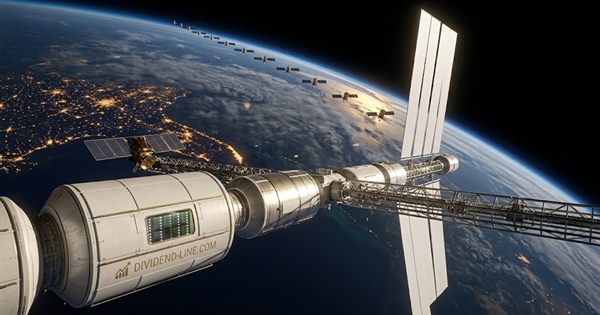
Starlink sells internet access from roughly ten thousand satellites in low orbit (approx.) — to homes without cable, ships, aircraft, armies and, increasingly, mobile phones. In 2025 it earned $11.4bn of revenue, 61% of the company, and $4.4bn of operating profit. In the second quarter of 2026 it had 12.0 million subscribers, twice as many as a year earlier.
The rockets — Falcon 9, Falcon Heavy, Dragon and the giant Starship still in testing — launch almost everything America sends to orbit, including Starlink itself. SpaceX flew 78 rockets in the first half of 2026. The segment loses money because it is spending roughly $2bn a half-year developing Starship.
The AI business arrived in February 2026, when SpaceX absorbed Elon Musk's xAI — the maker of the Grok chatbot, which also owns the social network X — at a valuation of $125bn. It rents computing capacity to other AI companies, sells Grok subscriptions and advertising on X, and has agreed to buy the coding tool Cursor for $60bn.
A ten-year-old would say: SpaceX sells internet from space, which works; flies rockets better than anyone, which is astonishing; and is now trying to build artificial intelligence, which is very expensive. The price you pay today is mostly for the third thing, and for things that have not happened yet.
The IPO. SpaceX listed on Nasdaq on 12 June 2026 at $135, selling 639 million shares for about $85.7bn of net proceeds — the largest share sale in history. The shares closed the first day at $160.95, peaked at $225.64 on 16 June, fell to about $107 in late July as enthusiasm cooled and a Starship booster misbehaved, and stand at $148.03. Two weeks after the IPO the company also sold $25bn of bonds at an average of 5.86%.
⚠️ A note on history. We have one quarter of results as a public company and three years of audited figures from the prospectus. For most companies on this board we judge the future partly by a decade of the past. Here, almost everything that matters to the price is in the future, which is why most of this analysis is about plans and dates.
★★ How to value a company priced on the future
Ask what must be true, by when, and how reliable the calendar is
When a company is priced mostly on what it has not yet done, three questions replace the usual ones.
First: what must be true? Not "is this a great company" — SpaceX plainly is — but "what does the company have to become for today's price to be a fair one?" We answer that with arithmetic in Part XI, and the answer is startling: to earn a 10% annual return from here to 2035, SpaceX must by then be earning roughly $235bn a year of profit. Microsoft, the most profitable software company in history, earned $128.8bn in its last fiscal year.
Second: by when? Value delayed is value lost. A Moon base that pays in 2035 is worth far less today than one that pays in 2030, and with the ten-year Treasury now above 5% the penalty for waiting is higher than it has been in two decades.
Third: how reliable is the calendar? This is where SpaceX is unusual. Almost every date that matters has been set by one man, publicly, many times. So we can do something rare: compare what was promised with what happened, and use the pattern to discount what is still promised. That is the promise ledger in Part IV, and it is the most important table in this report.
★ Buffett's warning about transformative industries is exactly on point. He has written that the automobile and the aeroplane changed the world, and that investors in both lost fortunes: thousands of car makers came and went, and he has described the airline industry's cumulative return to its owners, over its first century, as close to zero. A technology can be real, world-changing and poor for its shareholders at the same time — because the price already assumed the change, or because the change enriched customers rather than owners.
None of that means SpaceX will disappoint. It means the burden of proof sits with the price, and at $1.96 trillion it is very heavy.
★ The three businesses, today
What each earns, what each spends, and who pays for whom
| First half of 2026, $bn | Starlink & connectivity | Rockets & Starship | AI |
|---|---|---|---|
| Revenue | $7.55 | $1.58 | $3.38 |
| Growth vs H1 2025 | +49% | −2% | +131% |
| Operating profit / loss | +$2.84 | −$1.20 | −$3.73 |
| Segment adjusted EBITDA | $4.68 | −$0.56 | $0.54 |
| ★ Capital spending | $2.70 | $2.23 | $23.55 |
Starlink is the business Buffett would want to own. Revenue +66% in the second quarter to $4.3bn; operating profit +79% to $1.7bn; 12.0 million subscribers, adding 1.7 million a quarter. Enterprise and government revenue more than doubled, and SpaceX won over $6bn of multi-year Space Force contracts for Starshield, its military version, in one quarter. American, Southwest, Virgin Atlantic and others have signed for in-flight service. The one soft number is price: average revenue per user fell 22% to $66 a month as growth came from poorer countries and cheaper plans. Starlink is buying volume with price, which is what a low-cost leader should do.
The rockets are the moat and a cost centre. Space revenue was $962m in the second quarter, +29%, but the segment lost $542m because Starship research cost $1.08bn. Note one quiet fact: SpaceX launched 78 times in the first half of 2026 against 84 a year earlier, and put 1,041 tonnes in orbit against 1,102. The Falcon machine is near its natural ceiling; the next leap needs Starship.
The AI business is where the money goes. Its second quarter looked like a turnaround — revenue +247% to $2.56bn and its first positive adjusted EBITDA, $1.15bn — because SpaceX signed agreements to rent computing capacity to other AI companies, worth $14.1bn of contracted sales. But in that quarter the AI segment spent $15.8bn on equipment, took the company's capital spending to $18.4bn, and still lost $1.26bn at the operating line. ⚠️ Press reports on the prospectus describe the largest compute contracts — with Anthropic and Google — as carrying 90-day termination clauses. "Contracted sales" in SpaceX's own definition covers only the non-cancellable period.
★ Put simply: the best business in the group is being used to finance the most speculative one. In six months Starlink earned $2.8bn of operating profit and the AI business spent $23.6bn on equipment — eight times as much. Free cash flow for the half was about −$25bn. The IPO and the bond sale raised $111bn to pay for it. That is not a scandal; it is a strategy. But it is the strategy of a venture fund, and it should be priced like one.
★★ The plans — what SpaceX says, what we think is realistic, and when
The promise ledger: every major plan, its record and our window
Here is the vision, in the company's own terms: make life multiplanetary. Everything else — Starlink, the rockets, and now AI — is described as the means of paying for it. Musk's pay package makes the vision literal: in January the board granted him 1 billion additional shares in 15 tranches, vesting only as SpaceX's market value climbs from $500bn to $7.5 trillion and SpaceX establishes a permanent human colony on Mars of at least one million people.
We take the vision seriously. We also take the calendar seriously, which is a different thing. Before the table, the calibration.
★ SpaceX's record is late, not fake. Almost everything it has promised, it has eventually done: landed and re-flown orbital boosters, carried astronauts to the space station, caught a Super Heavy booster in the launch tower's arms, built the largest satellite network in history. But almost nothing arrived on the date first given. Crew Dragon was meant to carry astronauts in 2017; it did so on 30 May 2020. Our working rule for the dates below is the one the record supports: add two to three years to anything not yet demonstrated, and more to anything that depends on something else not yet demonstrated.
| Plan | What has been promised | Where it stands, Sep 2026 | Our realistic window | Weight in today's price |
|---|---|---|---|---|
| ★ Starlink broadband | Executives: 25 million users by end-2026; next-generation V3 satellites with far more capacity, launched on Starship. | Delivered and compounding. 12.0m subscribers (+1.7m a quarter); 20 production V3 satellites deployed on Starship Flight 13 in July. ARPU falling. | ~25m subscribers in 2028; $30–40bn of revenue around 2029–30. V3 at scale once Starship flies routinely, 2027–28. | High — and deserved |
| Starlink to ordinary phones | Bought ~65 MHz of EchoStar spectrum ($17bn, 2025); V2 direct-to-cell satellites with 'nearly 100×' the capacity from mid-2027. | FCC approved the spectrum on 12 May 2026. First-generation service (texts, some data) live with carriers in several countries; partnerships with SoftBank, NTT Docomo, T-Mobile. | V2 launches 2027–28; meaningful revenue 2028–30. Carriers are partners today and could be competitors tomorrow. | Medium |
| Starship — full, rapid reuse | Cost to orbit down '99% or more'. Full reuse of both stages. Orbital propellant transfer demo planned for March 2025, then March 2026. | Two V3 test flights (May, July 2026), Flight 13 met all objectives. The May booster suffered heat damage and failed its return. The refuelling demonstration is not yet scheduled. | Refuelling demo 2027; routine operational flights 2027–28; the full cost collapse 2029–31. | High — it enables everything below |
| The Moon | Feb 2026: SpaceX will prioritise a 'self-growing city' on the Moon, in under ten years. (A year earlier Musk wrote 'the Moon is a distraction'.) Starship is NASA's lunar lander. | NASA redefined Artemis III as an Earth-orbit docking test, late 2027; first landing now Artemis IV, early 2028. The landing needs ~10 tanker flights of propellant transfer. | First crewed landing 2028–30. A permanent base in the mid-to-late 2030s. A 'self-growing city' — beyond any horizon we can value. | Low–medium (NASA contracts) |
| Mars | Uncrewed landing promised for 2018 (2016 talk), 2022 (2017), 2026 (2024: 'five Starships'); now ~2029. Humans: 2024, then 2028, now 2031–33. | No Mars mission in the 2026 window, which Musk called a 'distraction'. Everything depends on refuelling, which has not been demonstrated. | Uncrewed landing attempt 2029–33. Humans mid-2030s at the earliest. A million-person colony: not in any investment horizon. | Should be ~zero; the pay plan says otherwise |
| Orbital data centres | Musk (Jan 2026): space-based AI compute viable within two to three years; space solar '10× cheaper'. First 'AI1' satellites — 150 kW each — in 2027. | Design shown on 8 June 2026. The S-1 itself warns the plans involve unproven technologies and 'may not achieve commercial viability'. | Demonstrations 2027–28; economic scale, if ever, 2032+. Cooling, radiation, maintenance and launch cost are unsolved at scale. | Unknown — part of the AI premium |
| xAI — a frontier AI company | Compete with OpenAI, Anthropic and Google; Grok 4.5 (July); 1.4 GW of compute and rising; buy Cursor for $60bn; rent capacity to rivals. | Revenue $2.56bn in Q2 (+247%), first positive adjusted EBITDA, $15.8bn of capex in the quarter. Its largest compute customers are its competitors. | Profitability not before 2028–29 on current spending. Whether xAI ends as a frontier leader or a well-funded fourth is unknowable today. | Very high — the largest single assumption |
Three things stand out from the ledger.
One: the proven business is not what the price is for. Starlink is delivering on schedule, or close to it, and it is worth a great deal — Part XI puts it at $300–500bn. But the company is valued at nearly $2 trillion. The difference rests on the rows coloured amber and red.
Two: nearly every red row depends on one amber row. The Moon, Mars, cheap orbital data centres and Starlink's next generation all require Starship to fly often, cheaply and with propellant transferred between ships in orbit. That demonstration has slipped twice and is not yet scheduled. It is the single most important event for SpaceX's long-term value, and when it happens — probably 2027 — it will deserve more attention than any quarterly result.
Three: the vision has already changed once this year. In February the priority moved from Mars to the Moon. Twelve months earlier the Moon was "a distraction". We do not criticise that — the Moon is closer, launch windows come every ten days rather than every twenty-six months, and it is the sensible first step. But an investor should notice that the plan the price depends on is revised by one person, in public, as he goes.
The moat
The deepest moat on our board — in two of three businesses
| Business | The moat | Width & trend |
|---|---|---|
| Launch | Reusable boosters built in-house, two decades of flight data, the crew vehicle NASA relies on, and a launch cadence no competitor approaches. Blue Origin, ULA, Rocket Lab and China are years behind on cost. | Widest in any industry we cover — stable |
| Starlink | The constellation exists and is paid for; it rides on the cheapest launch in the world, owned by the same company. Amazon's Kuiper and Chinese rivals must buy or build launch at a cost SpaceX does not pay. Now adding spectrum for phones. | Wide, widening |
| AI | Money, compute and distribution through X. Against OpenAI, Anthropic, Google and Meta — who have the same money and more customers. No moat we can identify yet. | None yet |
Type: cost advantage through vertical integration, the rarest and most durable kind. SpaceX builds its own engines, rockets and satellites, launches its own satellites on its own rockets, and sells the service directly. Every competitor in launch or broadband is paying a margin to someone that SpaceX keeps. We score the moat 8 rather than 9 or 10 only because the third business — now the largest use of capital — has none.
The circle of competence
A knowable business with an unknowable price
- xAI becomes a leader, not a follower — that $23.6bn a half-year of equipment, the $60bn Cursor purchase and Grok's distribution through X produce a frontier AI business worth several hundred billion dollars on its own, against competitors who are also its customers.
- Starship works on something close to Musk's calendar — propellant transfer in 2027, routine reuse soon after, so that Starlink V3, direct-to-phone, the Moon and orbital data centres arrive this decade rather than next.
- The governance does not cost you — that a controlling shareholder who also runs Tesla, with ten votes a share and a mandatory-arbitration clause in place of class actions, allocates the next $100bn in your interest.
Management, governance & ownership
An extraordinary operator — and the weakest shareholder protections on our board
Governance — the part we must dwell on. SpaceX is the first major American IPO to adopt mandatory shareholder arbitration under the SEC's 2025 policy change: most claims, including securities-fraud claims, must be brought individually in arbitration, with class actions and jury trials waived. CalPERS and the New York State and City comptrollers wrote jointly to object. Combine that with ten-vote Class B shares, Texas incorporation, a chief executive who also runs Tesla and whose companies trade with each other, and an outside shareholder has almost no remedy if things go wrong. Buffett's first test is integrity, and we have no evidence of dishonesty here. But he also asks whether owners are treated as partners, and these documents answer that question plainly.
Capital allocation is where we score 4. The engineering capital allocation is superb — Falcon and Starlink are among the best investments of the century. The corporate capital allocation of 2026 is another matter: xAI absorbed at $125bn in a transaction between two Musk-controlled companies, $60bn for Cursor, and $23.6bn of AI capex in six months, from a company whose only profitable division earned $2.8bn in the same period.
The numbers
Three audited years, one public quarter · and why most screen ratios are meaningless here
| Metric | 2023 | 2024 | 2025 | H1 2026 |
|---|---|---|---|---|
| Revenue | $10.4bn | $14.0bn | $18.7bn | $12.5bn |
| Operating income | −$3.5bn | +$0.5bn | −$2.6bn | −$2.1bn |
| Net income | −$4.6bn | +$0.8bn | −$4.9bn | −$4.8bn |
| Operating cash flow | $4.5bn | $5.8bn | $6.8bn | $3.5bn |
| Capital spending | $4.4bn | $11.2bn | $20.7bn | $28.5bn |
| ★ Free cash flow | +$0.1bn | −$5.4bn | −$14.0bn | −$25.0bn |
| Stock-based compensation | $0.7bn | $0.8bn | $1.9bn | — |
Balance sheet at 30 June 2026: cash and marketable securities of $100bn, debt of $39.4bn (including the $25bn June bond at a weighted 5.86%), equity of $127bn and backlog of $47.5bn. Net cash of about $60bn — before the $60bn Cursor purchase, expected to close in the third quarter, on terms whose cash component we have not seen confirmed. Figures for 2023–2025 include xAI on the combined basis presented in the prospectus.
| What the feed says | Value | What is true |
|---|---|---|
| Price / sales · EV / EBITDA | 117.7× · 455× | Built on a 'trailing twelve months' with missing quarters — the private-company quarters were never filed. On 2025 revenue the price is ~105×; on the Q2 run-rate, ~63×. |
| Capex / revenue | 197% | Same fault. H1 2026 capital spending was 228% of H1 revenue — worse, not better. |
| Consensus estimates, 2028 | EPS $4.24 · NI $11.8bn | Internally inconsistent. $4.24 a share on ~13.3bn shares is ~$56bn of profit, not $11.8bn. One of the two numbers is wrong; with only 11–15 analysts, we rely on neither. |
| DCF value | $35.85 | −76%, built on negative free cash flow. It says what SpaceX is worth if today's spending never pays — not useless, but not a valuation. |
| Weighted diluted shares | 2.9bn → 5.9bn | Meaningless across the IPO and share-class conversions. Shares outstanding are about 13.3bn, implied by Musk's filing. |
| Segments | empty | No segment data in the feed. All segment figures here come from SpaceX's Q2 release and press reporting of the S-1. |
The dividend
None, and none possible for years
SpaceX pays no dividend and, on its current plans, cannot. Free cash flow was −$14.0bn in 2025 and about −$25bn in the first half of 2026; the spending is financed by the IPO and bonds. There is no cover to test, no trend to measure and nothing that could be cut. For an income investor, the answer is simply that this is not an income security, and will not be one this decade.
★ The one dividend-adjacent point worth making is about Starlink. On its own, a business with $10bn of annualised adjusted EBITDA growing 60% a year would, once the constellation matured, be a formidable cash distributor. Inside SpaceX, that cash will fund Starship, the Moon and AI for as long as Musk runs it — which the pay package is designed to make a very long time.
Risks, lawsuits & controversies
Verified afresh, 25 September 2026
The risk we rank first is the price (Part XI). Even a successful SpaceX can be a poor investment from $1.96 trillion.
Second, the use of capital. The best business funds the most speculative one, at a rate of roughly $25bn of negative free cash flow a half-year, with a $60bn acquisition on top. The AI segment's largest customers are its competitors, on contracts reported to be cancellable at 90 days' notice.
Third, governance (Part VII): mandatory arbitration in place of class actions, ten-vote founder shares, Texas incorporation, a CEO who runs Tesla and a web of related-party dealings between Musk companies.
Fourth, execution on Starship. The May 2026 flight's Super Heavy booster suffered heat damage and failed its return; Flight 13 in July met all objectives. The refuelling demonstration everything depends on is unscheduled.
Fifth, the courtroom, verified this week. ① Grok deepfakes: multiple lawsuits since early 2026, including a class action and a High Court claim by UK MP Jess Asato, over sexualised images of real people, including minors; the European Commission opened a formal investigation on 26 January 2026, and regulators in the UK, Malaysia and elsewhere are examining it. ② Memphis: the NAACP, represented by the Southern Environmental Law Center and Earthjustice, sued in April 2026 alleging xAI ran dozens of gas turbines at its Colossus data centres without Clean Air Act permits; on 15 June the Department of Justice intervened on xAI's side and moved to dismiss. ③ Antitrust: on 19 September 2026 a suit filed in California accused SpaceX, Google, Anthropic and OpenAI of colluding to slow AI development; it is at the earliest stage. ④ No securities class action has been reported — and under the company's arbitration clause, one may not be possible in the ordinary form.
Sixth, supply. Most pre-IPO holders are locked up for 180 days, on a staggered schedule — around December 2026 — and Musk and insiders for 366 days, to June 2027. With a small float, those dates matter.
★ Valuation — what $1.96 trillion requires
Work backwards from the price, then forwards from the businesses
SpaceX pays no dividend, so a shareholder's entire return must come from a rising share price. Suppose you want 10% a year — roughly what the stock market has paid over long periods. From ~$1.96tn today, that means a company worth about $4.7 trillion at the end of 2035. If by then SpaceX is a mature, highly profitable company valued at a generous 20–25× earnings, it must be earning $190–235bn a year.
For scale: Microsoft earned $128.8bn in its last fiscal year. SpaceX lost $4.9bn in 2025 and consensus has it earning perhaps $12bn in 2028. The price requires SpaceX to become, within a decade, one and a half to two times as profitable as the most profitable software company in history — while also funding the Moon and Mars. That is not impossible. It is the base case the price has already assumed, and there is no margin for the calendar slipping.
| Piece | Our range | Reasoning |
|---|---|---|
| Starlink & connectivity (incl. Starshield, phones) | $300–500bn | Q2 run-rate: $17.2bn revenue, $6.6bn operating profit, $10.4bn EBITDA. Assume $35–45bn of revenue around 2030 at a ~35% operating margin, valued at 25–35× after-tax profit, discounted back. |
| Launch & Starship (incl. NASA, national security) | $100–200bn | Loss-making today because of Starship R&D; strategically priceless; valued as the cost to replicate plus a premium for a decade's lead. |
| AI — xAI, X, Grok, compute, Cursor | $100–400bn | xAI was absorbed at $125bn and Cursor costs $60bn. Real revenue, negative operating profit, no moat yet. The widest range because it is the least knowable. |
| Net cash | ~$60bn | $100bn of cash less $39.4bn of debt, before the Cursor payment. |
| Options — Moon, Mars, orbital data centres | $0–200bn | Real options, a long way off, on a calendar that slips. We do not assign zero; we do not assign a trillion. |
| ★ Total | $560bn – $1.36tn | About $42–$103 a share on ~13.3bn shares, midpoint ~$72. Today's price is ~45% above the top of our range. |
★ Our playbook's new rule does not apply here, and it is worth saying why. After Microsoft we committed never to demand a bargain for a wonderful business trading inside our own estimate of value. SpaceX's core businesses are wonderful. But the price is not inside our range — it is almost half again above the top of it — and our quality score is dragged down by governance and capital allocation. So "wait" is the honest answer, and the zone we name is where the knowable businesses pay for the price, not where everything becomes a bargain.
I have spent a long life being told that I do not understand technology, and I have mostly agreed. So let me begin with what I do understand about SpaceX, because there is a great deal of it and it is magnificent.
This company lands rockets on their tails and flies them again. It launches most of what the free world sends to orbit, at a cost its competitors cannot approach, and it uses that advantage to put up its own satellites and sell internet access from the sky to twelve million customers — twice as many as a year ago. That business, Starlink, earned one point seven billion dollars of operating profit last quarter and is growing more than sixty per cent a year. If Starlink were a separate public company, I would study it very carefully indeed. It has the thing I prize most: a cost advantage competitors cannot copy, because it is built on rockets they do not own.
Now here is what I do not understand, and I want to be precise about it, because the price depends on it.
In February SpaceX absorbed Mr. Musk's artificial-intelligence company. In the first six months of this year that business spent twenty-three and a half billion dollars on equipment and earned three point four billion of revenue. Its biggest customers are its competitors, on contracts that press reports say can be ended on ninety days' notice. It has agreed to buy a software company for sixty billion dollars. I cannot tell you what it will be worth in ten years, and I do not believe anyone can. Yet it is the largest single reason the company is valued at nearly two trillion dollars.
And then there are the plans. I admire them. A city on the Moon; ships to Mars; computers in orbit powered by the sun. I have read the promises back to 2016, and here is what I found: almost everything SpaceX has promised, it has eventually done — and almost nothing on the date first given. Astronauts to the space station were promised for 2017 and flew in 2020. An uncrewed ship to Mars was promised for 2018, then 2022, then 2026; it is now 2029. The refuelling test that the Moon and Mars both depend on was due in March 2025, then March 2026, and today has no date. Late is not fake. But when you pay for the future, late is expensive, and with the government now paying five per cent for ten years it is more expensive than it has been in a generation.
So I did the only sum that matters. To earn ten per cent a year from today's price until 2035, SpaceX must by then earn something like two hundred billion dollars a year — one and a half to two times what Microsoft earns now, from a company that lost almost five billion last year. I do not say it cannot happen. I say the price has already assumed that it will, on schedule, and leaves nothing for the calendar to slip.
There is one more thing, and it matters to me more than any number. The shares you can buy carry one vote; Mr. Musk's carry ten. The company's rules require shareholders to bring most claims individually, in arbitration, rather than together in court. Its chief executive also runs Tesla, and its companies trade with one another. None of that is evidence of wrongdoing. But I have always wanted to be treated as a partner, and these documents tell a partner, quite plainly, that he is a passenger.
So: too hard. Not because I doubt the engineers — I would back them against anyone — but because the price is made of dates I cannot trust and a business I cannot value, and the protections I would rely on if I were wrong have been removed.
Were the shares to fall to around sixty dollars — about eight hundred billion — Starlink, the rockets and the cash would roughly pay for themselves, and the artificial intelligence, the Moon and Mars would come nearly free. At that price I would think very hard, governance and all. At a hundred and forty-eight, I will watch the rockets with the same wonder as everyone else, and keep my money where I can see what I am buying.
And I would watch one event more closely than any earnings report: the day two Starships transfer propellant in orbit. When that happens, most of the red on our ledger turns amber. Until it does, the future you are paying for has not been demonstrated.
— The Buffett Lens · Dividend Line Research · admiring the rockets, and waiting for the refuelling
Admire the RocketsStarlink and the rockets are magnificent and knowable; the price is not for them. ★ At $148.03 — ~$1.96tn, ~105× 2025 revenue — you are paying for xAI, the Moon, Mars and orbital computing, on a calendar that has run two to three years late, with shareholder protections largely removed. Around $60 (~$800bn), the knowable businesses and the cash would carry the price and the rest would come nearly free. The event to watch is orbital propellant transfer. Q3 results early November.
Articles that take this apart
You've just read SpaceX the way we read every company.
The terminal that produced these numbers is free to use: 30 years of statements drawn as flows, a screener built around moats, Buffett's Desk, and an earnings feed read through the same lens. Opening an account takes a minute. No card.