The business, in plain English
814,000 people who plan, build and run the computer systems of the world's largest organisations
Accenture sells expertise by the hour, the project and the year. A bank that wants to move its systems to the cloud, a carmaker redesigning its supply chain, a government department building a benefits website or a retailer running its customer-service centre hires Accenture to plan the work, write and connect the software, and often to run it afterwards. It employs about 814,000 people, most of them in India, the Philippines and the United States, and works for more than 9,000 clients, including three-quarters of the Fortune Global 500 and every G7 government. A ten-year-old's version: big companies hire Accenture's people to make their computers do new things, and then to keep them running.
Its revenue comes in two roughly equal halves. Consulting ($36.9bn in the year to August 2026) is project work — strategy, system design, building and installing software — which clients can postpone when budgets are tight. Managed services ($37.3bn) is multi-year contracts to run applications, infrastructure, security or business processes, which renew and grow steadily. In fiscal 2026 managed services overtook consulting for the first time, and grew twice as fast.
The economics are unusual. Accenture owns almost no physical assets: capital spending was $743m on $74.2bn of revenue — 1%. Its costs are people, its inventory is their time, and its margin (an adjusted 15.8% in fiscal 2026) depends on how many of them are working on paid projects (93%) and what clients will pay per hour or per outcome. That is why one sentence in its annual report, filed on 16 October, matters more than any other: "we experienced lower pricing in many areas of the business during the fourth quarter." At $236.93 the shares are 90% above their June low and 43% below their 2021 record.
| Fiscal 2026 (to 31 Aug) | Revenue | Growth (local currency) | In one line |
|---|---|---|---|
| Managed services | $37.3bn | +6% | Multi-year contracts to run systems and processes; book-to-bill 1.2. |
| Consulting | $36.9bn | +3% | Projects; "smaller contracts with a shorter duration" still weak. |
| Americas | $36.5bn | +4% | Led by the US; US federal (~7% of total revenue) a drag. |
| EMEA | $27.0bn | +4% | +9% in dollars on a weaker dollar. |
| Asia Pacific | $10.7bn | +8% | Japan the largest market. |
The history — from an accounting firm's computer department to the world's largest consultancy
A partnership culture, a messy divorce, and twenty-five years of compounding
| When | What happened | Why it matters now |
|---|---|---|
| 1950s – 1989 | Arthur Andersen's administrative-services unit installs one of the first business computers (for General Electric, 1954); becomes Andersen Consulting in 1989. | Technology implementation is in its DNA. |
| 2000 – 2001 | Wins arbitration to separate from Arthur Andersen, renames itself Accenture on 1 January 2001 and lists in July 2001 — months before Andersen collapsed with Enron. | The brand survived because it had already left. |
| 2001 – 2019 | Grows into outsourcing and offshore delivery in India; moves its domicile to Ireland (2009); digital, cloud and security businesses built largely by acquisition. | The model: global delivery plus constant buying of skills. |
| 2019 – 2021 | Julie Sweet becomes CEO (2019). The pandemic accelerates cloud migration; the shares peak at $415 (Dec 2021), close to 40× that year's earnings. | The high-water mark of the multiple. |
| 2023 – 2025 | Consulting demand slows; Accenture spends heavily on generative AI, reports $5.9bn of Gen-AI bookings in fiscal 2025, and takes ~$0.9bn of severance and divestment charges, "exiting people" for whom reskilling is "not a viable path". | AI becomes the bull case and the bear case. |
| Feb – Jun 2026 | AI coding and agent launches set off a sell-off across software and IT services; Accenture's third-quarter bookings fall and it cuts guidance — −18% on 18 June, its worst day on record. | 9× earnings at the bottom. |
| Jun – Oct 2026 | Extra $2bn buyback near the lows; a fourth-quarter beat with record large deals (+15.8% on 1 October); an AI-safety partnership with Anthropic; the first Investor Day in four years. | Where this report begins. |
Two lessons for an owner. The first is that Accenture's history is one of reinvention by necessity: mainframes, then enterprise software, then outsourcing, offshore delivery, the internet, cloud, and now AI. Each wave threatened the old work and created more new work, and each time Accenture bought and trained its way into the new skills faster than its rivals. That is a real competence — and, in Buffett's terms, a warning, because a business that must reinvent itself every few years is never safe. The second is that the price of the shares has done most of the damage to owners recently, not the business: earnings per share rose from $9.16 in fiscal 2021 to $13.56 in fiscal 2026, while the multiple fell from about 30 to 17. The five-year total return is −26%.
The circle of competence
Easy to describe, hard to forecast: a business priced on what technology will do next
- That AI, like cloud before it, creates more integration, data and change work than it automates away — so revenue keeps growing mid-single digits even if hours per project fall.
- That Accenture can shift its pricing from hours to outcomes and keep a ~16% operating margin while clients demand AI productivity gains be passed on to them.
- That management keeps returning most of the cash and stops paying 25–35× earnings for its own shares in good years, as it did from 2021 to 2025.
How it makes money
Utilisation, price per hour and the pyramid — and why AI changes all three
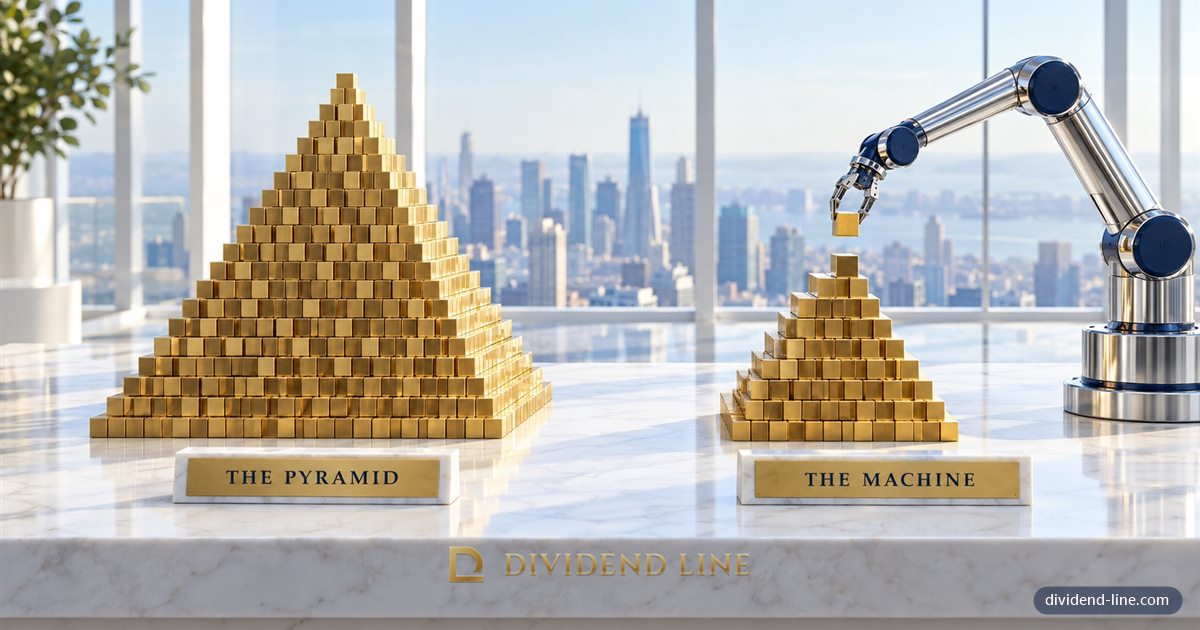
The pyramid. A consulting firm's profit comes from leverage: a small number of senior people win and supervise the work, and a large number of junior people — many in India — do it. Revenue is roughly the number of people billed, times the hours they work on paid projects, times the price per hour. Accenture's fiscal 2026 numbers are as good as this model gets: 93% utilisation (92% the year before), attrition down to 13%, and revenue per person, adjusted for currency, up 5% — the fastest growth in at least two years.
Why AI is both threat and opportunity. AI tools that write code, test it, document it and answer customer queries attack the bottom of the pyramid — the junior hours that make up much of the revenue in application maintenance, testing and business-process work. If a project that took 100 people now takes 60, and clients pay by the hour, revenue falls 40%. But AI also creates work that did not exist: preparing clients' data, rebuilding old systems so AI can use them, security, governance, and training. Accenture's answer is to sell more by outcome — a price for the result rather than the hours — and to keep the productivity gain itself. Whether clients let it is the business question of the decade.
The fourth quarter showed both forces. Revenue rose 7% in local currency, ahead of guidance, and large deals hit a record. But the 10-K says pricing was "lower in many areas of the business" in the quarter, after a year in which it was "relatively stable", and the company's risk factors now state that automation including AI "has led and may continue to lead to reduced demand for our services". Revenue per person rising while prices fall means people are doing more work each — consistent with AI raising productivity and Accenture, so far, keeping much of the benefit.
The moat
Relationships and scale that are real — but that must be rebuilt every year
| The claim | The evidence | Width · trend |
|---|---|---|
| Client relationships | 85% of the top 200 commercial clients and every G7 government served for 20+ years; 317 "diamond" clients; record 141 deals over $100m in fiscal 2026. But clients hire "on a non-exclusive basis". | Wide · stable |
| Scale and breadth | 814,000 people across 13 industries and every major technology; no rival offers the same range in every country. Revenue grew 5% in local currency in fiscal 2026 against 1.5–3% guided by Infosys and ~2% at TCS. | Wide · stable |
| The partner position | The top implementation partner for Microsoft, SAP, AWS, Google, Salesforce and Nvidia; 18 partners ≈ 65% of revenue, growing faster than the rest. New ties with OpenAI, Anthropic, Mistral and Dell in 2025–26. | Wide · contested |
| Pricing power | Stable for fiscal 2026 as a whole, "lower in many areas" in Q4. AI productivity gains are what clients expect to share. | Weakening |
| Cost of keeping the moat | ~$13bn of R&D, training and deal costs plus $18.7bn of acquisitions in fiscal 2023–26 — over half of the free cash flow, every year, to stay current. | High |
Buffett gave two tests in his 2007 letter that pull in opposite directions here. The first is the Mayo Clinic: "if a business requires a superstar to produce great results, the business itself cannot be deemed great." Accenture passes — it is an institution whose relationships and methods outlast any partner or CEO, and clients stay for decades. The second is the warning that "a moat that must be continuously rebuilt will eventually be no moat at all." Accenture fails that one in principle: its value lies in knowing the newest technology, so it must spend billions every year on training and acquisitions just to stand still, and each wave — cloud, now AI — resets part of the game.
In practice the moat has held for twenty-five years, because the cost of rebuilding it is lower for Accenture than for anyone else: it has the clients, so it learns where the work is first, and it has the cash to buy the skills. We score it 6 — wide relationships and scale, contested pricing, and a permanent reinvestment bill.
★★ The central question — is AI shrinking Accenture's work?
The February fear, the June panic, and what the numbers said by October
The fear. In February 2026 a run of AI launches — agent plug-ins for office work, then a claim that AI could modernise old COBOL mainframe systems — set off a sell-off across software and IT services. The logic was simple: if machines can write, test and migrate code, the world needs fewer people to do it, and companies that sell people by the hour will shrink. Accenture fell 9.6% on 3 February and 6.6% on 23 February. When its third-quarter bookings fell 3% in June and it trimmed its full-year forecast, the fear seemed confirmed: the shares fell 18% in a day and reached $124.44 by 30 June, nine times earnings.
What the numbers showed. By October the evidence pointed the other way, at least for now. Revenue grew 5% in local currency for the year and 7% in the fourth quarter. Revenue per person rose 5%, accelerating every quarter from zero in late 2024, while headcount rose by 35,000. Bookings were 1.1 times revenue, with a record number of very large contracts, and managed services — the multi-year work most exposed to automation in theory — grew fastest. The pattern so far is that AI is making each Accenture employee more productive and creating new work, rather than removing work.
| Signal | Direction | What it means |
|---|---|---|
| Revenue per person (FX-adjusted) | 0% (Nov 2024) → +5% (Aug 2026) | Productivity rising, kept by Accenture |
| Headcount | 779k → 814k in a year | Still hiring, not shrinking |
| Bookings · large deals | $84.5bn (1.1×) · record 141 over $100m | Clients committing for years |
| Pricing | "Lower in many areas" in Q4 2026 | Clients want AI savings passed on |
| AI disclosure | Gen-AI bookings $5.9bn (FY25) → "advanced AI" $2.2bn (Q1 FY26) → no longer in the headline metrics | Harder to judge the AI business |
| Consulting | +3% in local currency; Q4 book-to-bill 1.0; small contracts weak | Discretionary demand still soft |
| The model labs | OpenAI's Deployment Company (May 2026, >$4bn); Anthropic's venture with Blackstone, H&F and Goldman | New competitors — and partners |
Our reading: AI is a price cut on Accenture's work, not yet a volume cut. The June price assumed volume would collapse. It has not; Accenture is doing more work with more people. What is happening instead is slower and more subtle: clients expect part of the productivity gain, so the price per unit of work falls, and Accenture must sell more units — more projects, more AI-related work, more outcome-based contracts — to grow. So far it has. The risk is that the price cuts accelerate faster than volume grows, as happened to the Indian outsourcers' margins in earlier waves. The decision to stop reporting AI bookings in the headline metrics is the one thing we dislike: a company confident in its AI business would show it. We judge the June panic overdone and today's price a fair reflection of a business growing mid-single digits with a moat under pressure.
The competition
Cheaper rivals below, strategy firms above, and the AI labs arriving from the side
| Competitor | Arena | Where Accenture stands | Threat |
|---|---|---|---|
| TCS, Infosys, Wipro, HCLTech | Offshore IT services | Cheaper, more exposed to AI-driven deflation in maintenance work. Infosys guides 1.5–3% growth; TCS grew ~2% in dollars last quarter. Accenture is growing faster. | Medium |
| Cognizant, EPAM, Capgemini | IT services and engineering | Cognizant guides 4–5.5%; Capgemini is a backer of OpenAI's deployment company. | Medium |
| Deloitte, PwC, EY, KPMG | Consulting and technology | Board-level access through audit and tax; Deloitte is the largest rival in technology consulting. | Medium-high |
| McKinsey, BCG, Bain | Strategy | The top of the funnel; McKinsey and Bain also back OpenAI's deployment company. | Medium |
| OpenAI, Anthropic (direct) | AI deployment | OpenAI's Deployment Company (>$4bn, May 2026) and Anthropic's venture with private-equity firms place engineers directly with clients. Tiny today next to 814k people — and Accenture partners with both. | Low now, high later |
| Clients' own centres | Insourcing | Large companies building their own "global capability centres" in India. | Medium |
The pattern. Accenture sits in the middle of the market: more expensive than the Indian firms, cheaper and more hands-on than the strategy houses, and broader than anyone. AI squeezes the bottom of that market hardest — the routine maintenance and testing work where Indian rivals are strongest — and creates work at the top, where clients need help deciding what to do and connecting models to messy old systems. That is why Accenture has outgrown its Indian peers through the AI scare. The newer threat is the model companies themselves: if OpenAI and Anthropic deploy their own engineers into clients, they take the most valuable part of the work. For now both are Accenture's partners — Anthropic is paying Accenture to help evaluate its models — and the competition is more theoretical than visible in the numbers. The comparison on our board is ServiceNow, a software platform facing the same AI question from the other side.
Management, ownership & capital allocation
A well-run institution that returns its cash — and, until June, bought its shares at any price
| Decision | When | Our read |
|---|---|---|
| Buy back ~$4.5bn a year at 25–35× earnings | FY2021 – FY2025 | Mostly to offset ~$2bn a year of share-based pay. Diluted shares fell from 668m (FY16) to 632m (FY25) — but at prices well above today's. |
| Add $2bn to the buyback near the low | Jun 2026 | "We do not believe our current share price reflects that position" — Sweet, with the stock at ~$127. Q4 purchases averaged ~$131; the stock is $237. Right, for once. |
| Keep buying companies | FY2023 – FY2027 | $18.7bn across ~110 deals in four years, ~$8bn planned for fiscal 2027 including the ~$4.2bn Dragos cyber-security purchase announced on the day of the June crash. |
| Borrow $5bn | Jul 2026 | Long-term debt doubled to $10bn; net cash fell to ~$2.7bn. Fiscal 2026 dividends, buybacks and deals ($16.4bn) exceeded free cash flow ($11.6bn). |
| Slow the dividend; cut the buyback | Oct 2026 | Dividend growth set at 5% (payout in the high 40s of prior-year earnings); buybacks cut to $5.5bn for fiscal 2027 as the price nearly doubled. Price-sensitive — or making room for deals. |
Integrity: no veto, two flags. Accenture's reporting is clear and conservative, and it has not hidden bad news — it cut guidance in June rather than stretching. The flags are the open Justice Department investigation of its federal unit (Part XII) and the decision to drop AI bookings from its headline metrics. Capital allocation: good in aggregate, poor on price. For a decade Accenture has returned roughly 70–100% of its free cash flow, which is right for a business that cannot reinvest much internally — Buffett noted in 2007 that great asset-light businesses "can't for any extended period reinvest a large portion of their earnings internally at high rates of return". But it bought shares at 25–35× earnings for five years, and only became price-sensitive this summer. His 2011 test — "what is smart at one price is dumb at another" — cuts both ways in this record. Owner mentality: weak. Executives are paid mostly in stock, but none bought any with their own money when the company itself said the shares were cheap. We score management and capital 6.
The numbers
Growth of 5–8%, a margin creeping up, and cash above earnings
| Metric | Value | Read |
|---|---|---|
| Revenue — FY2026 · growth (USD · local) | $74.2bn · +6% · +5% | ▲ Above the 2–5% first guided |
| Revenue, ten-year growth | $34.8bn → $74.2bn | ▲ 7.9% a year |
| Adjusted operating margin — FY2026 · FY2027 guide | 15.8% · 15.9–16.1% | ▲ 10–30 bp a year planned |
| EPS — GAAP · adjusted (FY2026) | $13.56 · $13.97 | ◆ +12% GAAP, +8% adjusted |
| EPS guide FY2027 (GAAP = adjusted) | $14.39 – $14.81 | ◆ +3–6% on adjusted FY2026 |
| Free cash flow — FY2026 · FY2027 guide | $11.6bn · $11.0–11.8bn | ▲ 1.4× net income; guided 1.2–1.3× |
| Share-based pay | $2.1bn | ◆ ~18% of free cash flow — a real cost |
| Cash · debt (31 Aug 2026) | $12.8bn · $10.1bn | ◆ Net cash ~$2.7bn, down from ~$6.4bn |
| New bookings · book-to-bill | $84.5bn · 1.1× | ▲ Record large deals |
A steady compounder, slowing. Over ten years Accenture grew revenue 7.9% a year and adjusted earnings per share roughly 9–10% a year, helped by a shrinking share count and rising margins. Fiscal 2026 fits the pattern: 5% organic growth, 1.5 points from acquisitions, a margin up 10 basis points, adjusted EPS up 8%. The plan for fiscal 2027–28 is similar but slightly slower — mid-single-digit growth, with acquisitions adding 2–2.5 points — and fiscal 2027's guidance implies adjusted EPS growth of only 3–6%, because higher interest costs and a higher tax rate offset the operating gains.
The cash is better than the earnings. Accenture turned $1.40 of every $1 of net income into free cash flow in fiscal 2026, helped by working capital. Management guides 1.2–1.3× for fiscal 2027 and "at least 1.1×" afterwards. Share-based pay of $2.1bn a year is not a cash cost but is a real one for owners, which is why we deduct it in owner earnings (Part XI).
| What the feed says | Value | What is true |
|---|---|---|
| DCF value | $236.67 | Within a cent of the share price — a model calibrated to the market, not a valuation. We do not use it. |
| Market value | $145.0bn | Uses 617m weighted-average shares; 596m were outstanding on 31 Aug 2026, giving ~$141bn. |
| 52-week low | $118.15 | Real, but an intraday price on 22 June; the closing low was $124.44 (30 June). |
| Dividend history (third-party series) | two payments missing | The $1.63 payments of October 2025 and January 2026 are absent from widely used price series, understating the trailing yield and the one-year return (≈ +3.6%, not +2.2%). |
| EPS growth FY2026 | +12% | GAAP growth is flattered by $615m of restructuring charges in fiscal 2025; adjusted growth was +8%. |
★ The dividend — safe, covered three times, and deliberately slowed
From double-digit raises to 5% by policy
| Test | Value | Reading |
|---|---|---|
| 1 · Cover on free cash flow | 2.9× | $11.6bn of free cash flow against $4.0bn of dividends in fiscal 2026 — a payout of 34%. |
| 2 · The trend of the cover | 2.7× – 3.8× | Every year since fiscal 2017 between 2.7× and 3.8×; the dividend has grown roughly with cash flow. |
| 3 · Funded by operations or by paper? | dividend yes; the total no | The dividend is easily paid from cash. But dividends, buybacks and acquisitions together ($16.4bn) exceeded free cash flow in fiscal 2026, and the fiscal 2027 plan does again — the gap is borrowed. |
| 4 · Balance-sheet room | net cash ~$2.7bn | Debt of $10.1bn against $12.8bn of cash; interest of $303m a year against ~$11.7bn of adjusted operating profit. |
| 5 · What would force a cut | very little | Earnings would need to halve. Buybacks ($5.5bn planned) and acquisitions are the flexible items and would be cut first. |
| 6 · The growth rate | +4.9% | After raises of 10–15% a year in fiscal 2020–26, the raise to $1.71 a quarter is the smallest in at least fourteen years — now policy: 5% a year, payout in the "high 40s" of prior-year earnings, falling to the "mid 40s" in fiscal 2029. |
The verdict on the dividend: safe and growing slowly. Accenture's dividend is among the safest on our board: a payout of a third of free cash flow, net cash, and a business that has never cut it. The change in October is not a warning about the cash; it is a decision about where the cash goes. With the payout already near half of earnings, management has chosen to grow the dividend at 5% and put more into acquisitions — about $8bn in fiscal 2027 — on the view that buying AI, data and security skills earns more than paying it out. Income investors should expect the dividend to grow a little slower than earnings for the next three years. At 2.9% the yield is respectable, not compelling; at the June low it was 5.5%.
★ Valuation — the bargain was in June
From 9 times earnings to 17: fair value for a good business with an uncertain future
| Measure | Value | Reading |
|---|---|---|
| Price · market value (19 Oct 2026) | $236.93 · ~$141bn | Enterprise value ~$138bn after ~$2.7bn of net cash. |
| P/E — trailing adjusted · FY2027 guide midpoint | 17.0× · 16.2× | On $13.97 and $14.60. |
| Free cash flow yield (FY2026 · FY2027 guide) | 8.2% · 7.8–8.4% | Before deducting share-based pay; ~6.7% after. |
| Typical P/E, FY2019–FY2025 | 23× – 31× | Today's 17× is the pre-2017 "old normal" (15–19×). |
| Low of the year | 9.2× (30 Jun) | The lowest multiple since at least 2008. |
| Analysts' mean target | $227 (range $175–278) | Below the price — most targets were set after the June crash. |
What is it worth? We discounted owner earnings of about $13.50 a share at 10% for ten years. If they grow 6% a year for five years and 5% for the next five — roughly the Investor Day plan plus a shrinking share count — and the business is then valued at 15 times, Accenture is worth about $245, almost exactly today's price. If AI deflation wins — earnings flat for five years, then falling 2% a year, ending at 11 times — about $125, which is where the stock traded in June. If AI turns out to be another cloud wave and earnings grow 9% and then 7%, ending at 19 times, about $350.
At $236.93 the price is our central value. The range is wide because the question in Part VI is genuinely open, and the June price — the pessimistic case — was the opportunity: anyone who bought then with the company has nearly doubled their money in four months. Our playbook does not demand a bargain for an exceptional business at a fair price, but Accenture scores 6 on its moat, not 8 or more: a moat that must be rebuilt every year, facing a technology that could cut the price of its work. For that we want a margin of safety. Our advice: hold if you own it; buy below about $195 — 20% under our central value, about 13 times fiscal 2027 earnings and a 3.5% yield. The stock closed below that level for most of the period from late February to late September 2026; the AI debate is likely to offer it again.
Risks, lawsuits & controversies
Verified 20 October 2026 — AI pricing, consulting demand, a federal investigation and a borrowed gap
The risk we rank first is price. Accenture's business is selling work, and AI makes the work cheaper to do. If clients capture most of that saving — through lower day rates, fixed-price contracts or doing more in-house — Accenture's revenue can stall even while its people stay busy. The fourth-quarter comment on pricing is the first sign in its own filings, and the company's risk factors now say AI "has led and may continue to lead to reduced demand". We will watch pricing commentary, revenue per person and the consulting book-to-bill each quarter.
Second, the federal investigation. Accenture Federal Services, about 7% of revenue, disclosed that the Justice Department has opened civil and criminal investigations into whether employees made "inaccurate submissions to an assessor" evaluating one of its services and whether it fully implemented required federal security controls. Possible outcomes include False Claims Act penalties and suspension or debarment from federal contracts; Accenture says it cannot estimate the cost beyond amounts accrued. Separately, in September 2026 it paid $25m, without admitting liability, to settle False Claims Act allegations over diversity hiring goals in federal contracts.
Third, other courts — limited. The Marriott/Starwood data-breach class action (2019) continues after class certification was reversed again in June 2025; Accenture expects no material loss. After the June crash several plaintiff firms announced "investigations" on behalf of shareholders, but we found no securities class action filed, and none is listed in the 10-K. Accenture also carries $2.5bn of unrecognised tax benefits, with transfer pricing a critical audit matter.
| Matter | Status on 20 October 2026 | What is at stake |
|---|---|---|
| DOJ investigation — federal security controls | Open; civil and criminal (10-K fiscal 2026, Note 15). | Penalties; suspension or debarment of the federal unit. |
| DOJ — diversity goals (False Claims Act) | Settled September 2026, $25m, no admission. | Closed. |
| Marriott/Starwood data breach class action | Pending since 2019; class certification reversed again June 2025. | No material loss expected. |
| Shareholder "investigations" after 18 June | Announced by plaintiff firms; no suit found or disclosed. | Low. |
| Tax — transfer pricing, Irish domicile | $2.53bn of unrecognised tax benefits; EU state-aid and treaty risks noted. | Tax rate, cash. |
| Dragos and Cyber-OT acquisitions | ~$4.2bn; closed in the first quarter of fiscal 2027. | Integration; price paid. |
I have written that I like businesses whose moats do not need rebuilding, and that a business requiring a superstar cannot be called great. Accenture passes the second test and fails the first, and that tension is the whole story of its year.
The business deserves its due. It is an institution, not a personality: clients have stayed with it for twenty years and more, it is the first call for the world's largest organisations when they must change their systems, and it turns its earnings into cash almost one for one while needing almost no capital. When the market panicked this spring about machines doing its work, the company kept hiring, its people got more productive, and its customers signed a record number of large contracts. Management bought its own shares near the bottom, and said why in public. That is good conduct.
Now the rub. Accenture sells work, and the cost of doing work is falling. Its own annual report says prices were lower in many areas in the latest quarter, and it has stopped telling us how much of its business is artificial intelligence. It must spend half its cash, year after year, buying companies and training people just to stay current. For five years before this one it bought its own shares at twenty-five to thirty-five times earnings. And not one of its officers bought a share with their own money when the price had halved.
At $237 you pay about seventeen times what I would call owner earnings, which on our central reckoning — growth around six per cent, a slowly falling share count — is roughly what the business is worth. If AI cuts the price of its work faster than it creates new work, it is worth about what it fetched in June; if AI proves another wave like the cloud, a good deal more. The dividend is very safe and will grow about five per cent a year.
So I would hold it, not buy it, today. The time to buy was in June, when fear priced the pessimistic case. If you own it, the business is sound and the dividend secure. If you do not, wait for about $195 — the debate about machines and consultants is far from over, and it will offer that price again.
— The Buffett Lens · Dividend Line Research · an institution with a moat it must dig again every year
Buy Below $195A superb people business whose moat must be rebuilt every year, now at a fair price. ★ At $236.93 — ~17× owner earnings, 8% free-cash-flow yield — the price equals our central value (~$245); the bargain was the June low (~$124), our pessimistic case. Hold if you own it; buy below ~$195 (13× FY2027 earnings, 3.5% yield). Watch pricing, revenue per person and consulting bookings.